01
Extract style
Use a Consistent Style Descriptor (CSD) to obtain the reference style feature from one image.
Training-free stylized video generation via stochastic optimal control.
Silver Award, Tencent Rhino-Bird Science Talent Program for High School Students (top 3 awardees; 1 Gold and 2 Silver Awards granted in total)


FreeStyle-VidGen integrates the stochastic optimal control (SOC) mechanism from RB-Modulation into AnimateDiff. A single style reference image and a text prompt are used to generate a temporally coherent video while preserving the prompt’s semantic content.
The key idea is to formulate reverse diffusion as a controllable stochastic process. Style matching is enforced through a terminal cost, temporal consistency through an adjacent-frame cost, and a control variable modifies the reverse-diffusion drift during sampling.
Style guidance is injected through optimization of the diffusion dynamics rather than style-specific model training.
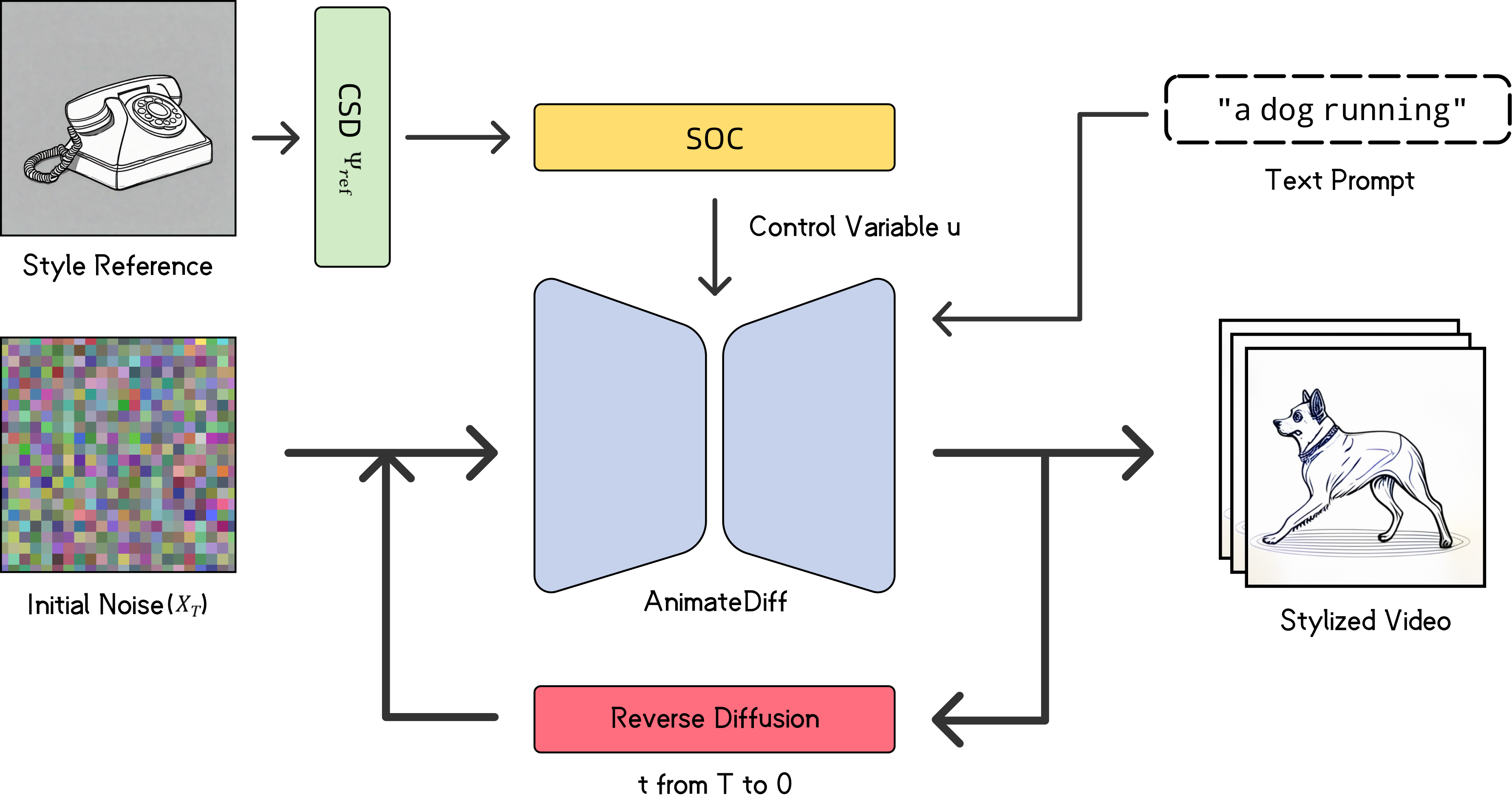
Use a Consistent Style Descriptor (CSD) to obtain the reference style feature from one image.
A terminal cost aligns generated frames to the reference style; a temporal cost penalizes style jumps between adjacent frames.
A control variable u is optimized with a proximal-gradient formulation to balance style alignment and trajectory fidelity.
The optimized control adjusts the reverse-diffusion drift at each denoising step, producing stylized video latents for decoding.
Animated examples showing the generated video results.
Two independent reference styles applied to the same content prompt.
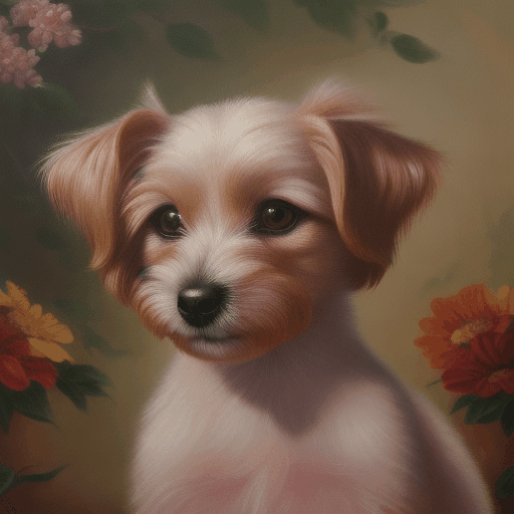

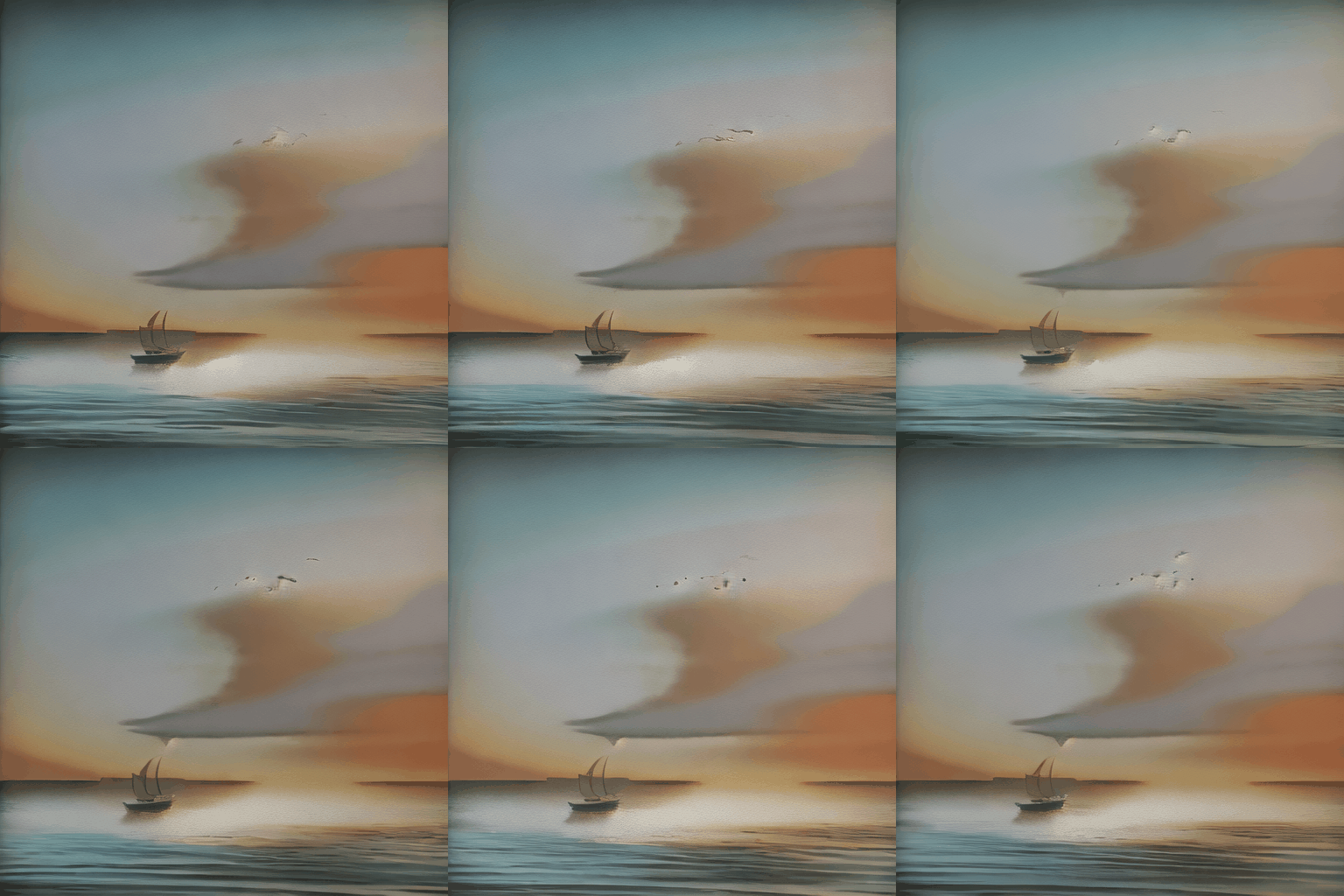
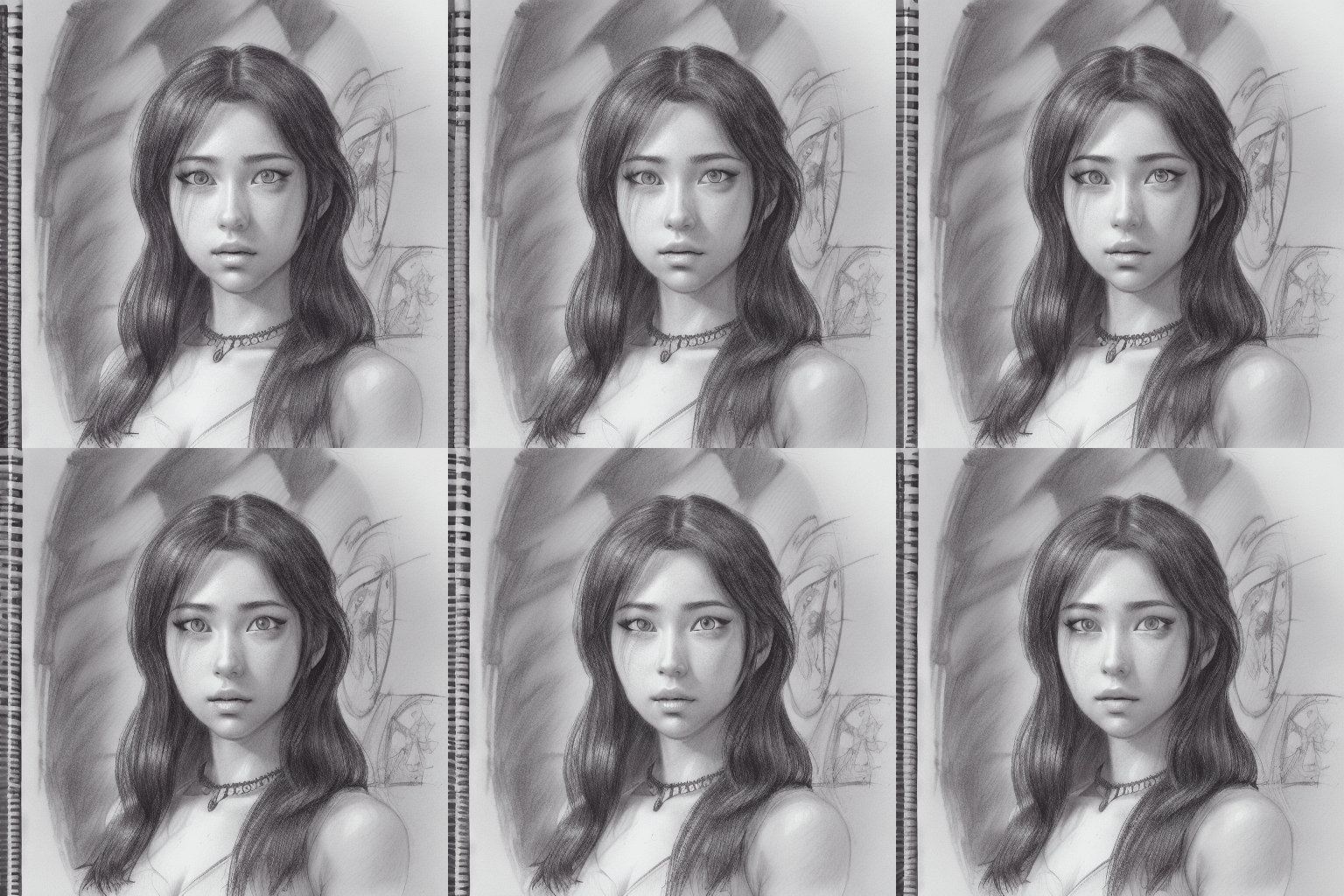
Sketch and watercolor-like references produce distinct visual appearances.
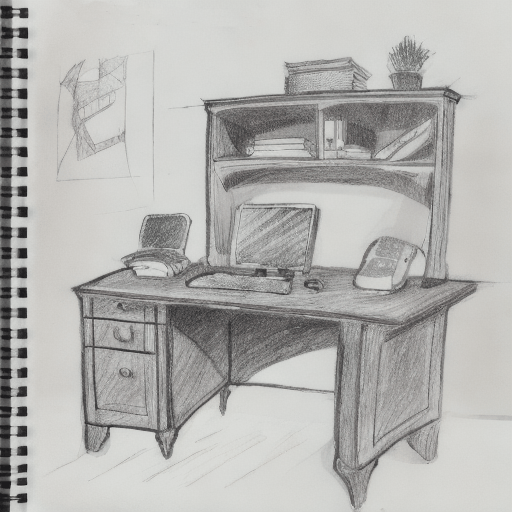
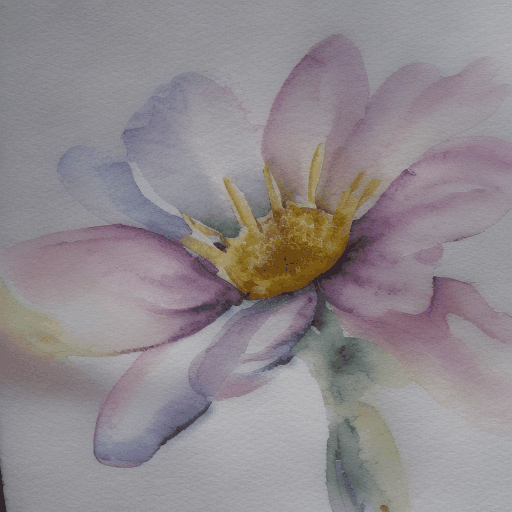
LPIPS comparison and an ablation of the stochastic optimal control component.
| Method | LPIPS ↓ | Inference time | VRAM |
|---|---|---|---|
| AnimateDiff | 0.64 ± 0.04 | 20 ± 2 | 5536 MB |
| AnimateDiff + LoRA | 0.60 ± 0.04 | 30 ± 3* | 6354 MB |
| FreeStyle-VidGen | 0.55 ± 0.03 | 25 ± 2 | 9231 MB |
* Fine-tuning time excluded.

Final quality remains bounded by AnimateDiff’s content modeling and style-capture capability.
The method inherits AnimateDiff’s temporal modeling limitations and can show frame-to-frame flicker in motion-heavy scenes.
The current SOC design is tied to reverse-SDE diffusion dynamics and cannot be directly transferred to deterministic Flow Matching ODEs.
Future work targets an ODE-compatible control strategy and temporal attention-feature aggregation, together with broader framework implementations.